




Cycle patterns
Illustration · not test results
1Whether your endometriosis is active now or in the past

Trusted by 20,000+ women
Twenty years of learning your endometriosis: what a flare feels like, what suppression costs, which OB/GYNs listen. Then the night sweats start, the sleep goes, and hormone therapy, the thing you were always told to avoid, is suddenly the question.
Estrada™ is estradiol and micronized progesterone in one daily cream, prescribed by an OB/GYN for perimenopause and menopause. With endometriosis in your history it is prescribed carefully or not at all, and the progesterone in every strength is part of why it can be.
Your endometriosis care stays where it is. An OB/GYN reviews your history, your surgery and your current treatment before anything is added.
HSA/FSA eligible
OB/GYN-Prescribed TreatmentOB/GYN-Prescribed Treatment
Bioidentical Estradiol + ProgesteroneBioidentical Estradiol + Micronized Progesterone
Made in U.S.ACompounded in a Licensed U.S. Pharmacy

Estrogen fed it for decades, and the transition doesn’t switch it off cleanly. What it does is add a second set of symptoms that look like the first.Sound familiar?
An OB/GYN can tell which symptom belongs to which. That is the first thing worth two minutes.
Start the two-minute quizFour things decide whether, and how, Estrada™ is prescribed when endometriosis is part of your story.
Four things decide whether, and how, Estrada™ is prescribed when endometriosis is part of your story.
Estradiol and progesterone together, never estrogen alone.
Four strengths, so your OB/GYN can start low.
Adjusted by message, and stopped if pain returns.
Estrada™ supports:
It does not treat endometriosis itself.
Active pain gets its own care first.
Tell an OB/GYN your history
Before hormone therapy with endometriosis in the picture:
Cycle patterns
Illustration · not test results

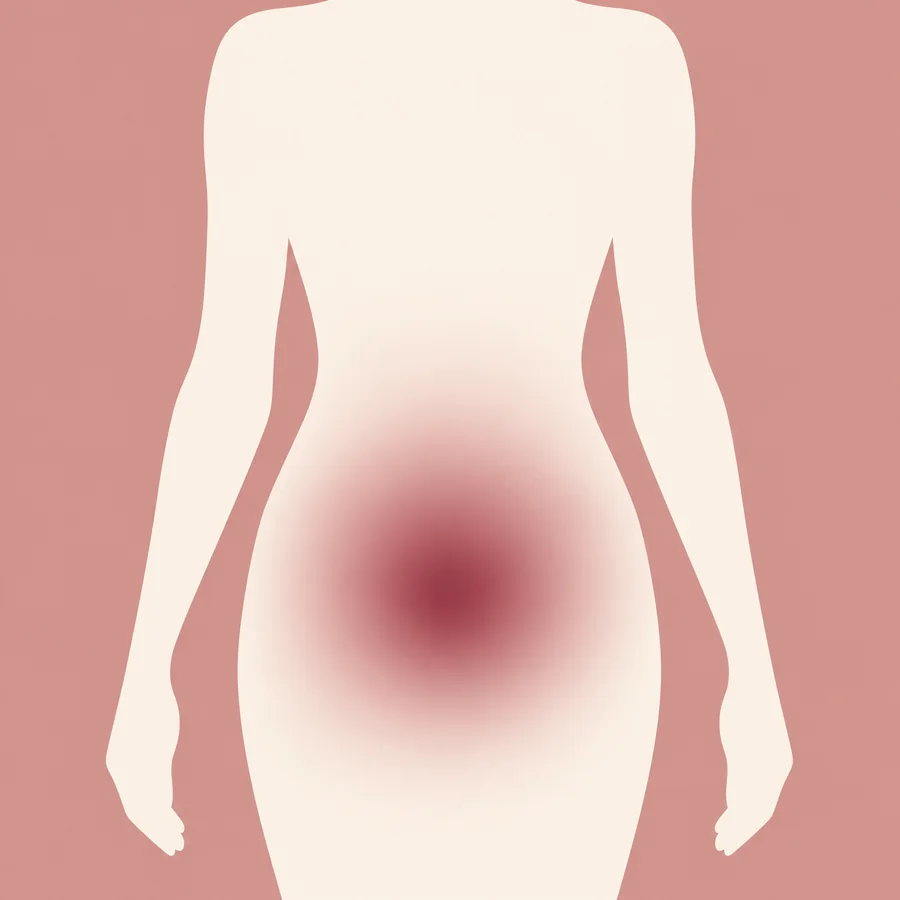
Then a strength is chosen, and pain is watched for after.
Start the two-minute quiz

The estrogen your body used to produce. Cooler nights. Steadier mood. Less dryness.

The calming hormone your body used to produce. Deeper sleep. A quieter mind. A protected uterine lining.

A dose that fits you now, and changes when you do. Set by a real OB/GYN.

YOUR SOHA PLAN
The timeline
Everyone's timeline is different. This is what hormone therapy often looks like in the first two months.

Sleep
Week 2 · The first nights
Progesterone tends to work first. For many women the first thing that changes is sleep. Falling asleep faster, waking less, fewer sheets kicked off at 3am. Not more sleep. Uninterrupted sleep. Women describe it as the first real sign.
A guide, not a schedule of results or appointments. Follow your care plan; OB/GYN messaging is available throughout.

Relief starts here.Prescribed by an OB/GYN.
Which of these have you noticed in the past month? Choose all that apply.
A short online intake about your symptoms, history, and goals. About two minutes, no appointment. Not a checklist. An OB/GYN reads every answer.


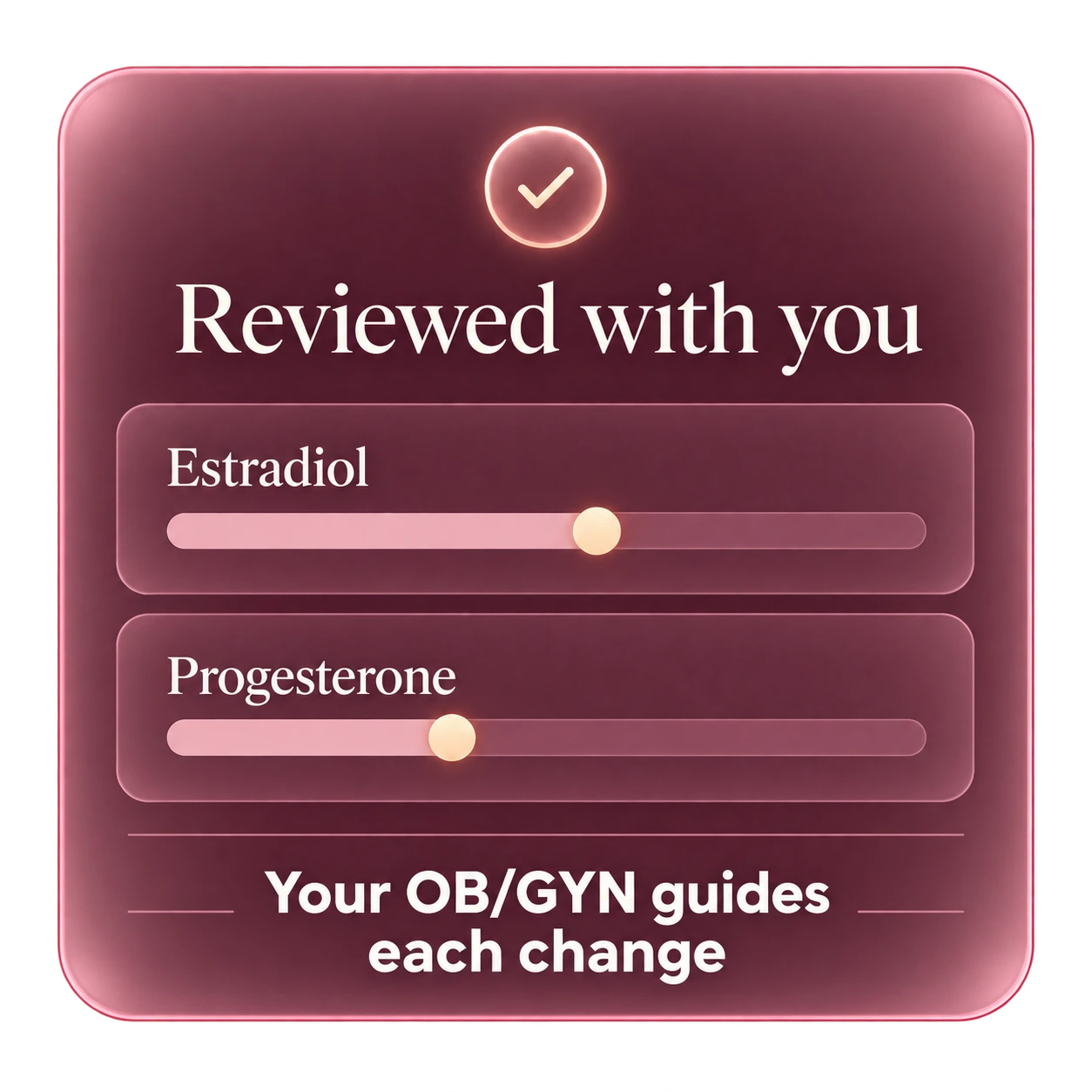


Swipe to explore your care

Two minutes of questions about your history, your surgery, what you take and what changed. An OB/GYN who knows what endometriosis changes about hormone therapy reads them.
No appointment. No being told it’s just your age by someone who never asked about the endo.
No insurance needed. Cancel anytime.
Here for your questions
Explore your care, one question at a time.
No. Endometriosis is managed by keeping estrogen down, with progestins, continuous birth control, GnRH medicines or surgery, and that care stays with whoever provides it. Estrada™ is hormone therapy for perimenopause and menopause. With endometriosis in your history, an OB/GYN decides whether and how it fits.
It needs care. Estrogen on its own can wake endometriosis up, which is why the usual guidance for women with that history is estrogen together with a progestogen, even after a hysterectomy. Estrada™ carries progesterone in every strength. Your OB/GYN weighs your history, your surgery and your symptoms before prescribing, and watches for any return of pain after.
Not for the uterus. With endometriosis in your history, many OB/GYNs still prefer estrogen with a progestogen, and yours decides.
If endometriosis is active and painful today, that needs its own treatment first, with an OB/GYN or specialist who can examine you. This page is for the perimenopause and menopause symptoms that arrive on top of an endometriosis history.
Benefits and risks depend on your history and the treatment. Your OB/GYN should review both, including alternatives, before prescribing.
It describes a hormone with the same molecular structure as one produced in the body. The term does not mean a medicine is risk-free.
If you have a uterus and are considering systemic estrogen, ask your OB/GYN how the uterine lining will be protected and which formulation is appropriate.
Hormone medicines can cause side effects. Ask about those associated with your prescription and report new symptoms to your OB/GYN.
Some health conditions make treatment unsuitable. Share your complete medical history, including cancer, blood clots, liver disease, or unexplained bleeding.
The WHI studied particular hormone regimens and health outcomes. Ask your OB/GYN how the evidence relates to your age, history, and proposed treatment.
Breast-cancer risk can differ by regimen and duration. Discuss your personal and family history with your OB/GYN rather than assuming all hormone treatments have the same risks.
There is no set end date. You and your OB/GYN revisit it as you go.
Heart health belongs in your risk review. Hormone therapy should not be started solely to prevent heart disease.
Clot risk depends on your history and treatment. Using a cream does not establish that your prescription has no clot risk.
Your OB/GYN decides whether tests or other monitoring are needed. Bring previous results if you have them.
List all prescriptions, over-the-counter medicines, and supplements so your OB/GYN can review possible interactions.
You can begin by sharing your concerns. An OB/GYN determines whether further evaluation or a diagnosis is needed before treatment.
The introductory quiz is brief. A prescribing review may require additional questions or information.
Yes. Soha is OB/GYN reviewed. Your plan also includes unlimited messaging with an OB/GYN for ongoing questions and support.
Yes. Unlimited messaging with an OB/GYN is included in your Soha plan, so you can ask questions about your routine and discuss how you are feeling as treatment continues.
Once a day. When you start, your OB/GYN goes over the timing with you.
Follow the instructions supplied with your prescription, or ask your pharmacist or OB/GYN what to do.
Use the storage instructions and beyond-use date on your pharmacy label.
Care comes from an OB/GYN licensed in your state. Confirm availability for your location before beginning treatment.
No. HSA and FSA funds can be used, though.
This service is for adults. Your OB/GYN also considers your age, symptoms, and health history when assessing whether treatment is appropriate.
Timing depends on prescribing review and pharmacy preparation. Check your order updates for the expected dispatch date.
Yes. The outer box is plain and gives no hint of what is inside.
Whenever you like, from your account, and there is no fee for it.